
High-Performance Parallel Computing
CS598 :: Fall 2026
- Class Time: Wednesday/Friday 12:30-1:45pm [Catalog]
- Class Location: 1304 Siebel Center for Comp. Science
- Instructor: Paul Fischer
- Office Hours: 4320 Siebel, Thu. 3:00-4:30 or by appointment
- About the Course
- Lectures
- Quizzes
- Homework
- Midterm Project
- Final Project
 About the Course
This course focuses on high-performance distributed-memory parallelism for scientific computing. We will address (CPU) performance at the node level, weak- and strong-parallel scaling, communication-minimal and low-latency data exchange strategies for a variety of algorithms (direct linear solves for full and banded systems, iterative solvers, multidimensional FFTs, hash tables, etc.). This is a hands-on course with multiple programming exercises in C. Students are expected to be proficient in C or Fortran and in unix or variants such as linux. Students will learn how to design and test distributed-memory parallel algorithms, how to use MPI at scale, and how to optimize single-node performance.
List of Topics
- Introduction
- Single-Node Performance
- Pipelining / vectorization
- Avoiding loop clutter
- Identifying vector dependencies
- Importance of unit-stride addressing
- BLAS1, BLAS2, and BLAS3 (HW1)
- Communication Performance
- Ping-pong benchmark
- Nonblocking MPI
- Latency (α)
- Inverse bandwidth (β)
- On-node vs. off-node communication performance
- Scalable vector reduction
- Distributed prefix (running) sum
- Ping-pong benchmark
- Fast Poisson Solver
- Distributed transpose
- Two-dimensional all-to-all transpose
- Parallel FFT-based Poisson solver
- Complexity analysis
- Extension to three dimensions
- Three-dimensional Fast Poisson solver
- Distributed transpose
- Direct Solvers
- Direct matrix factorization
- BLAS-1 implementation
- Partial pivoting
- Blocked BLAS-3 implementation
- Parallel banded solvers
- Tridiagonal systems
- Extension to bandwidth b ≪ n
- Complexity analysis
- Direct matrix factorization
- Communication Algorithms
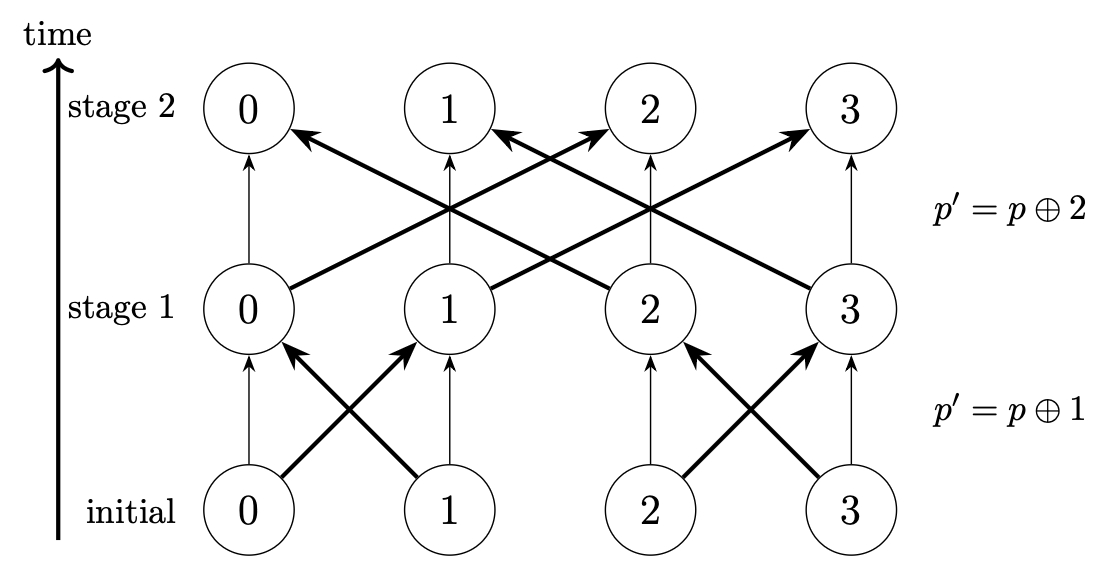
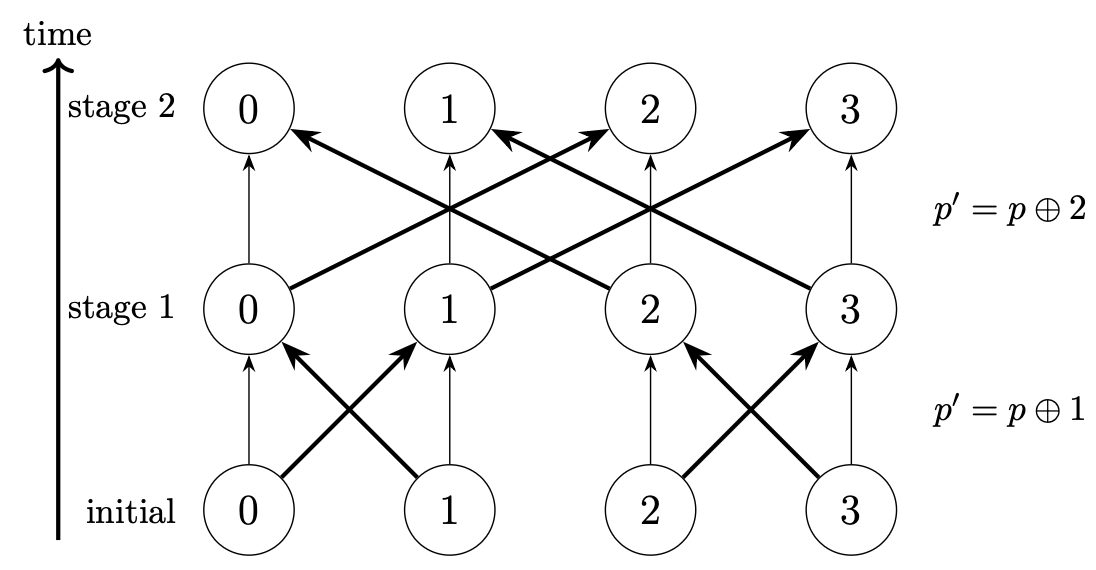
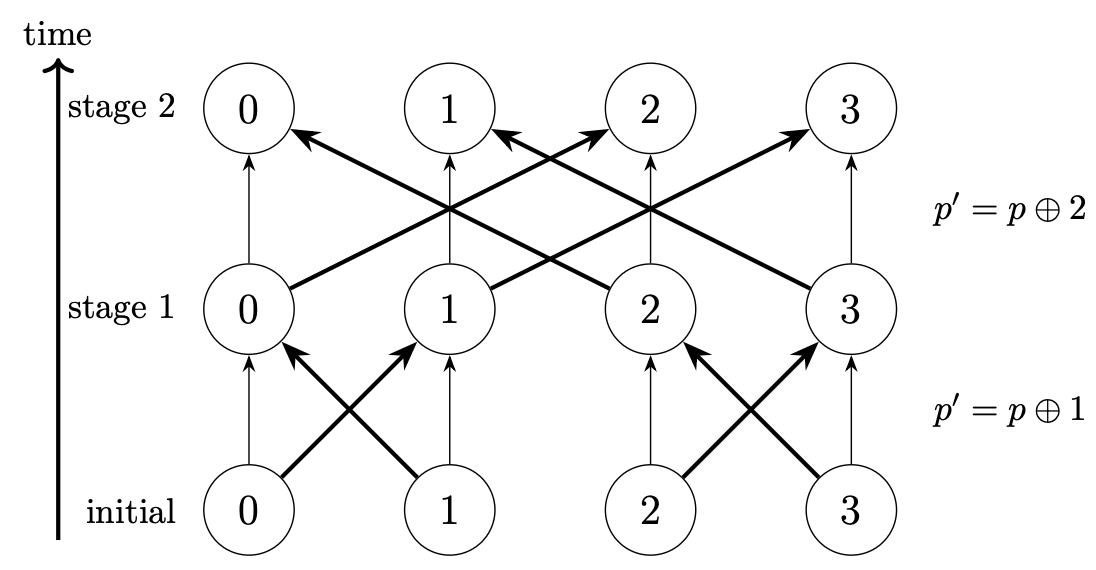
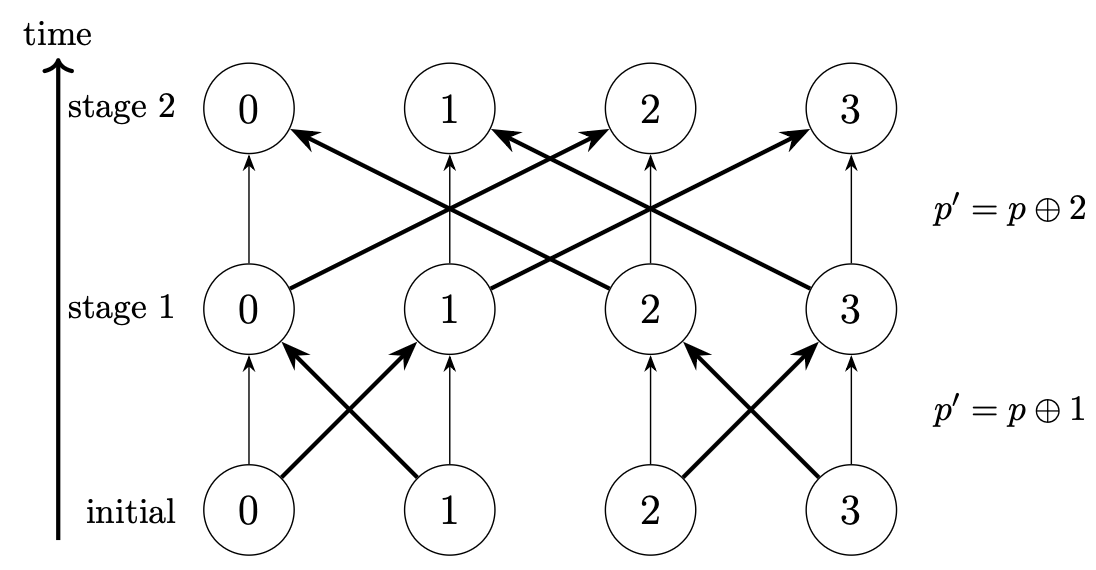
- Crystal router
- Arbitrary processor counts
- Communication traffic analysis
- Gather-scatter operations (gslib)
- Planar averaging
- Finite-element assembly
- User-defined gather-scatter operations
- Crystal router
- Domain Decomposition
- Domain Decomposition I
- Jacobi iteration
- Halo exchange
- Strong scaling
- Parallel efficiency
- Domain Decomposition II
- Conjugate Gradient
- Strong scaling
- s-step methods
- Domain Decomposition III
- Multigrid
- Coarse-grid solvers
- Three-dimensional geometric multigrid
- Graph partitioning
- Domain Decomposition I
- Other Parallel Algorithms
- Parallel sorting
- Radix sort
- Bitonic sort
- Bucket sort
- Communication-aware load balancing
- Parallel sorting
- For each algorithm, we consider Performance and Performance Modeling
- Computational complexity
- Communication complexity
- O(n), O(n/P), O(P), O(log P)
- Performance models
- Measured vs. predicted performance
- Cache-aware algorithms
- BLAS optimization
- Expected performance bounds
- Estimating n_{0.8}
- Time-to-solution models
- Dependence on n/P
- Dependence on machine characteristics
 Prerequisites
The expectation is that you have had a course in numerical methods (like CS450) covering numerical linear algebra and perhaps the basics of numerical methods for differential equations or other disciplines. If you do not have this background, please check with the instructor.
You should have skills in some programming language, preferably a compiled language like C or Fortran. In addition, you should have familiarity with linux/unix, including the use of an editor or should pick up basics in this class.
 Expected work
The course involves ~ 7 to 10 assignments along with short midterm and final project presentations based on material developed over the semester. There is also a strong participation grade based on quizzes, handouts, and other in-class tasks. The tentative grade breakdown is:
Work in teams of two for the Homework and Projects.
- Quizzes, in-class work 10
- Homework 70
- Midterm Project 10
- Final Project 10
Course assignments will be in C.
 References
| Category | References |
|---|---|
| Fundamental concurrent scientific-computing algorithms | |
| Strong-scaling studies | |
| Communication strategies | |
| Single-node computer architecture | |
| Rank undersubscription |
Lectures
| Lecture | Date | Topic | |
|---|---|---|---|
 |
08-26 | About the course, intro to message passing | |
|
08-28 | Scaling analysis example; intro to single-core performance; first MPI code | |
|
09-02 | Intro to single-core performance | |
|
09-04 | MPI intro | |
|
09-09 | All-to-All | |
|
09-11 | All-to-All | |
|
09-16 | All-to-All | |
|
09-23 | Parallel LU | |
|
09-25 | Parallel LU | |
|
09-30 | Parallel LU | |
10-02 | Parallel LU / Intro to Tridiagonal Solves | |
10-07 | Parallel LU / Intro to Tridiagonal Solves | |
10-09 | Parallel LU / Tridiagonal Solves, II |
 Quizzes
- Quiz 1, Due: Friday, Sep. 25, 12 noon
Homework
- Homework 1, Due: Wednesday, Sep. 9, 8 pm
- Homework 2, Due: Wednesday, Sep. 23, 8 pm
- Homework 3, Due: Friday, Oct. 9, 5 pm
Guidelines and files:
- Work in Pairs There should be one write-up for each pair of students (but submit a copy under each student's name).
- Homework Submission: All homework must be typeset using LaTeX. Use the provided templates to get started, available at homework-netid-N.tex
- Figures: Make sure all figures are clearly labeled with axes, titles, legends, and captions. Each figure must be referenced and discussed within your text for full credit. Be sure to use logscales, where appropriate.
- Originality: Your submitted code and figures must be your own. If you use someone else's work, you must cite it.
- Code-Based Problems: Code in C. This will allow us to compare performance/issues, etc. (It's not a race.) To receive points for problems involving code, your code must reproduce the reported figures and data. No points will be awarded for the Codes that do not generate the reported results.
- Debugging Efforts: If you encounter issues that prevent your code from working as expected, detailed descriptions of your debugging attempts can earn you partial credit.
 Midterm / Final Projects
Midterm and final exams will be in the form of project presentations. Details to follow.